In 1900, the Michelin brothers had a problem.
France had fewer than 3,000 cars on the road. If their new tyre business was going to succeed, people needed to drive more—and stay on the road longer.
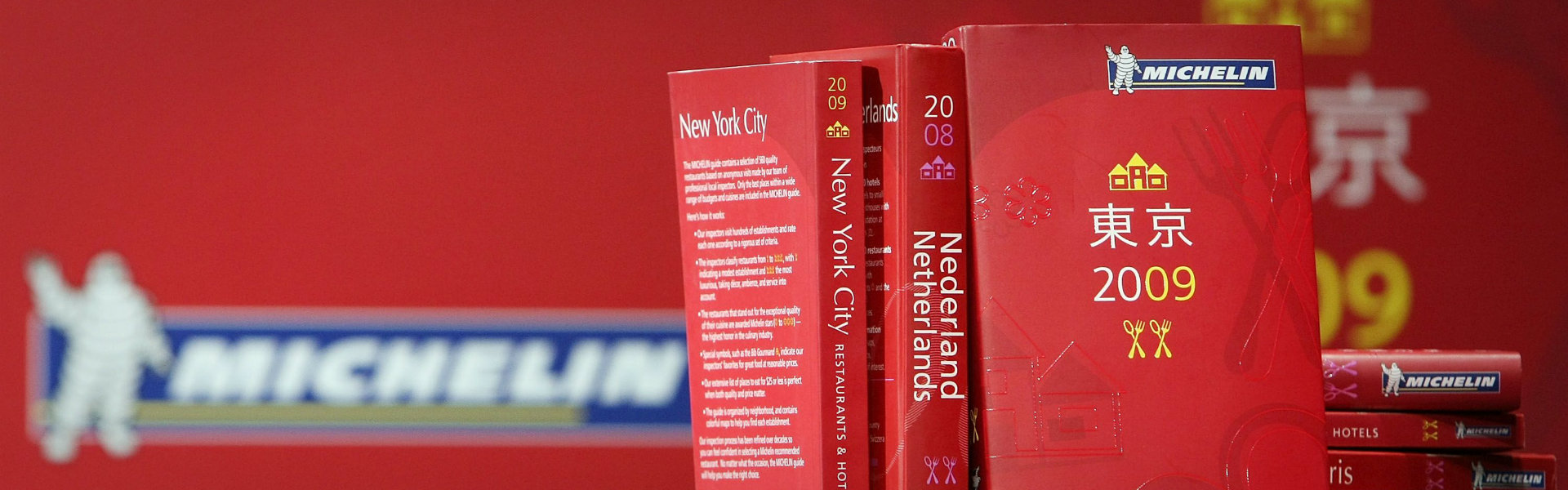
Their solution? A free red booklet filled with useful travel advice: maps, repair stations, petrol stops… and, tucked in the back, a list of places to eat and sleep.
That was the start of the Michelin Guide.

What began as a clever bit of brand building became—over the next century—the most feared and respected restaurant rating system in the world. The Michelin star. A symbol of excellence, a standard of consistency, and in many cases, the defining currency of a chef’s career.
This blog isn’t about food reviews. It’s about what the Michelin Guide teaches us as operators, builders, leaders—and why its slow-burn rise mirrors every great hospitality project I’ve ever delivered.
The Origins: A Red Book and a Big Idea
The first Michelin Guide was pure marketing.
André and Édouard Michelin weren’t thinking about gastronomy—they were thinking about tyre sales. The logic was brilliantly simple: get people on the road, and they’ll wear out more tyres. So the red book came free with every new car. It listed fuel depots, rest stops, repair shops, and cafés worth pulling over for.
For 20 years, it was given away. Until André Michelin walked into a garage and saw one propping up a workbench. Legend has it he said, “People only value what they pay for.” In 1920, the Guide started retailing for seven francs.
A few years later, the stars arrived.

Stars, Structure and the Rise of Authority
In 1926, Michelin introduced a star for “fine dining establishments.” By 1931, the now-familiar one, two, and three-star system was born. In 1936, the criteria were officially published:
- One star: “A very good restaurant in its category”
- Two stars: “Excellent cooking, worth a detour”
- Three stars: “Exceptional cuisine, worth a special journey”
That last line matters. Michelin wasn’t just rating meals—it was influencing where people travelled, where they stayed, how they planned their lives. It turned chefs into destinations.
The Guide expanded slowly but methodically—France, then Europe, then the US and Asia. Today, Michelin publishes in more than 30 countries and rates over 30,000 restaurants worldwide.
The Michelin star became a global shorthand for one thing: trust.
What This Has to Do with Hospitality Projects
So why does this matter to people like us—project directors, delivery leaders, hospitality professionals?
Because the Michelin Guide is one of the purest examples of brand trust ever built.
It didn’t shout. It didn’t market. It just showed up—every year, anonymously, consistently, rigorously—and built a standard. Slowly. Quietly. Without compromise.
That’s exactly how the best projects in our industry are delivered.
Whether it’s a 3-hat restaurant, a luxury hotel, or a 40-acre tourism precinct—excellence is never fast. Reputation is built in layers. Credibility comes from consistency. And long-term success comes from having the discipline to get the small things right, every day.
In my own career—from Saint Peter to Sydney Zoo to ICC Sydney—I’ve seen this play out over and over again. Trust is earned slowly. Standards matter. And when you start delivering at the highest level, people notice.
So did Michelin.
Michelin as a Business Driver
Today, restaurants chase Michelin not just for prestige, but for commercial advantage.
One star can increase revenue by 20–30%. Two or three stars can launch an entire brand: new venues, books, collabs, licensing deals, tourism traffic. Entire business models are now calibrated around the Guide’s expectations—sourcing, training, menu cadence, even interior design.
In that context, the Michelin star becomes more than an award. It’s a hard-won endorsement of delivery. And that’s something every serious project leader should understand.
Up Next: The Secret Life of a Michelin Inspector
In Blog 3, we’ll step behind the curtain. How does the inspection process actually work? Who are the inspectors? What do they look for—and how do they make their decisions?
If consistency is the benchmark, then inspection is the mechanism. And like any high-pressure review process, it tells us everything about how elite standards are defined and maintained.
Stay with me—we’re just getting started.
Ben Webb
Award-winning Project Director
www.benwebb.au | Medium | LinkedIn
Leave a Reply